
Five EN 71-1 Failures on a Kids' Scooter, and the One That Came After It Passed

Jacky, Sales & Marketing Director
Published
HYDK206 is our folding two-wheel kick scooter for young children. In September 2024 its first sample failed five points of EN 71-1 at Intertek. We fixed all five, and the scooter passed in October 2024.
Then customs found a problem in the first production order. When the scooters were cleared at import, customs took samples and sent them for testing. A plastic stopper at the folding joint had been mounted slightly off position, which left a gap of 5 to 12 mm. EN 71-1 does not allow that size, because a child's finger can be trapped. We refunded the order in full and paid for the scooters to be destroyed.
Here is each failure, what we changed, and what we learned about the step between a passed sample and a compliant shipment.
Where HYDK206 came from
A customer was selling our HYDK201, a two-wheel scooter for children aged 6 to 9. HYDK201 is built for riders up to 100 kg, so we test it to EN 14619 (see EN 71 or EN 14619?). The customer wanted a smaller model for ages 4 to 6.
We based HYDK206 on HYDK201. For a 4–6 year old the scooter is a toy, so it has to meet EN 71-1. To keep the price down, we also changed the folding mechanism to our basic one. We knew the new folding joint left a gap, so we added a plastic stopper to close it.
Five failures on the first sample, and the fixes
Intertek Wuxi tested the first sample in September 2024 for children aged 4 to 6. EN 71-2 (flammability) passed. EN 71-1 failed on five points:
| # | What failed | The requirement | What we changed |
|---|---|---|---|
| 1 | Gaps between the wheels and the forks | On a toy that carries a child and has a folding or sliding mechanism, a gap that admits a 5 mm rod must also admit a 12 mm rod. | Moved the front and rear wheels closer to their forks, so the gaps are under 5 mm. |
| 2 | The hole for the spring button | An accessible opening in a moving part that could cut a finger must not admit a 5 mm rod. | Reduced the hole to 4.7 mm. |
| 3 | Steering tube | In the steering tube strength test, the locking device must not fail or come loose. | Fitted a thicker clamp and added a bushing inside the stem tube, so the clamp locks the T-bar tight. |
| 4 | Handlebar ends | The ends of toy scooter handlebars must be at least 40 mm in diameter. | New grips with ends over 40 mm. |
| 5 | Warning | A toy scooter for children up to 50 kg must carry the warning: "Protective equipment should be worn. Not to be used in traffic. 50 kg max." | Corrected the warning label. |
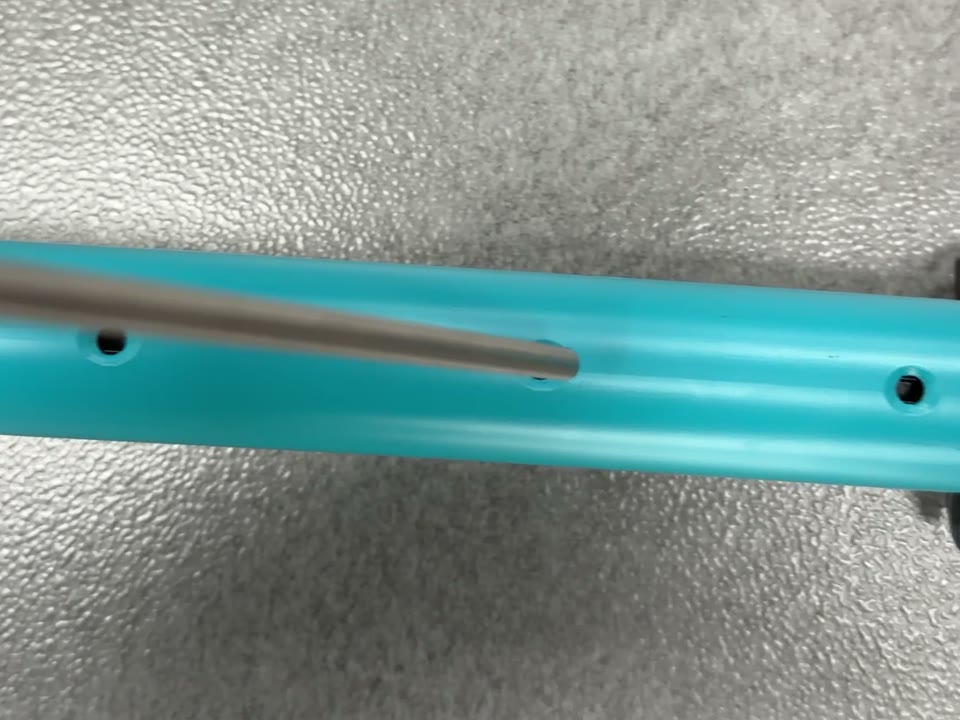


Points 1 and 2 are the finger rule. Under 5 mm, a finger cannot go in. Over 12 mm, a finger that goes in can come out. Between 5 and 12 mm, it goes in and can be trapped when the parts move.
The retest sample went in on 29 October 2024. The next day Intertek issued a report with EN 71-1, EN 71-2 and EN 71-3 passed.
The failure after the pass
A test report covers the sample that was tested. In mass production, the plastic stopper at the folding joint ended up slightly away from where it sat on the sample. On the shipped scooters the folding gap was more than 5 mm and less than 12 mm: exactly what the stopper was there to prevent.
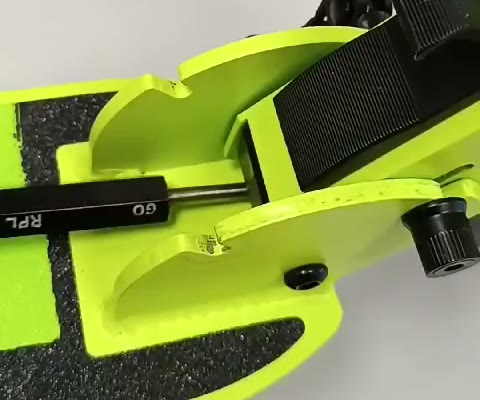
Customs found it. At import clearance they took samples from the shipment and had them tested. A gap in the frame cannot be fixed with a label or a manual, and the scooters could not be reworked. They could not be sold. We refunded the full order and paid for the scooters to be destroyed.
What we changed
The stopper sat correctly on the sample and slightly off on production units. So the fix had to work for every unit we assemble, not just for a careful sample. We moved the stopper's mounting hole slightly lower. With the hole in the new position, the folding gap stays under 5 mm, even with the normal small differences between one assembled scooter and the next.


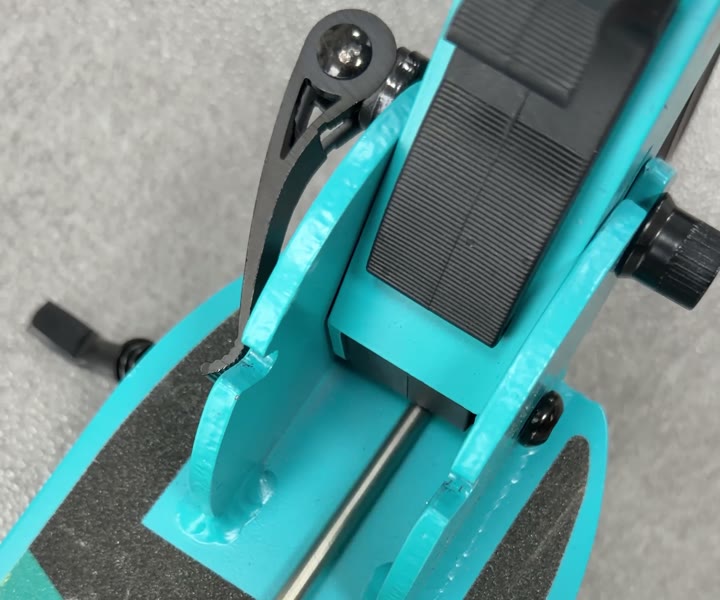
HYDK206 was tested again by TÜV Rheinland in February 2025 to EN 71-1, EN 71-2 and EN 71-3 (report 304117530a 001). That sample already had the stopper in the new position. The first page of the report is on our test reports page.
Two rules came out of this:
- When a customer change touches the structure of a product, or its target age, we review the design against the target standard again before we approve the pre-production sample. A change of target age can move a scooter from EN 14619 to EN 71.
- For any part that brings a gap within limits, such as a stopper or a cover, we check whether it still works if it is assembled slightly off. If it only works in the exact position, we change the design.
If you are ordering a custom version
- Tell us every change you want at the quotation stage, including a different target age.
- If the change touches a moving part, ask how the gaps were checked, on the sample and on production units.
- Check whether the existing test report still covers your version. If the structure or the target age changed, an older report does not show that the new version complies.
- Ask which parts keep the product within limits, and what happens if one of them is fitted slightly off. Customs and market authorities test units from the shipment, not the sample that passed.
Sources
- EN 71-1:2014+A1:2018, Safety of toys – Part 1: Mechanical and physical properties (CEN)
- Intertek Testing Services Wuxi, test result notice SHJ1733841 (2024-09-09) and test report SHAH01733841 (2024-10-30), HYDK206, applicant HYDO Sports
- TÜV Rheinland test report 304117530a 001, HYDK206, 2025-02-28 (first page on our test reports page)
Jacky
Sales & Marketing Director, HYDO Sports
Jacky has led sales and marketing at HYDO Sports since 2014. He also oversees production and testing for all our balance bikes, scooters and skateboards.
LinkedIn